



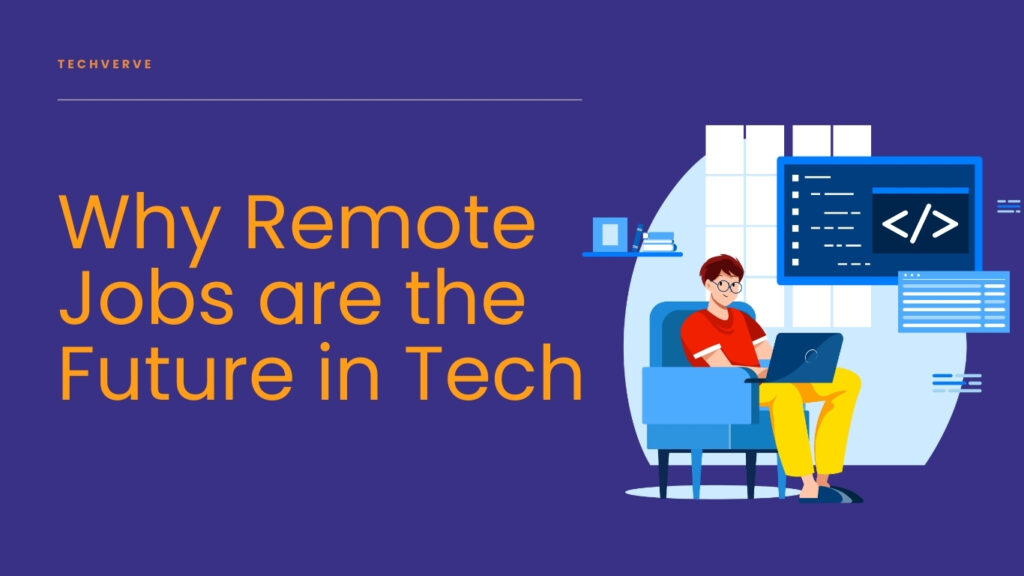
Why Remote Jobs are the Future in Tech

9 minutes read

Let’s not deny it anymore, remote work has reshaped the way the tech world operates. What started as a temporary solution during the pandemic has evolved into a permanent shift that’s redefining how companies hire, how developers collaborate, and how people live.
But this transformation didn’t happen overnight. It’s the result of years of technological advancement, shifting work values, and a growing understanding that productivity isn’t tied to a desk or an office.
So, why exactly are remote jobs the future in tech, and what does that mean for developers, designers, engineers, and tech companies around the world?
Let’s break it down.
1. The Tech Industry Was Built for Remote Work
Even before remote work became mainstream, tech was already halfway there. Developers were collaborating through GitHub, designers shared prototypes on Figma, and teams communicated through Slack long before Zoom meetings became a daily routine.
The truth is, tech roles don’t rely on physical presence as much as other industries. A backend engineer can push updates from their living room just as efficiently as they would from a cubicle. A UX designer can work on product interfaces while traveling across countries, as long as there’s Wi-Fi and a laptop.
And that’s exactly why tech adapted faster than any other industry when remote work went mainstream. The systems, tools, and culture were already in place. Remote work didn’t disrupt tech, it simply accelerated what was already happening.
2. Companies Are Hiring Talent Without Borders
One of the biggest advantages of remote work in tech is access to global talent.
A few years ago, companies mostly hired within their city or country. Today, a startup in San Francisco can have developers in Lagos, designers in Berlin, and project managers in Mumbai, all working together seamlessly.
For employers, this means a deeper talent pool and reduced hiring costs. For tech professionals, it means more opportunities, regardless of where they live.
In fact, global hiring platforms like Toptal, Deel, and Remote.com are proof that location no longer limits talent. Companies now care more about skills and results than where your desk is located.
This global shift is leveling the playing field for skilled professionals everywhere, especially in emerging markets, where talented developers can now work for international companies without relocating.
3. The Remote Culture Boosts Productivity and Innovation
There’s a common misconception that remote workers are less productive. But several studies have shown the opposite.
When people are given flexibility, autonomy, and trust, they tend to perform better.
A 2023 report by Owl Labs found that 62% of remote employees feel more productive working from home compared to working in an office. That’s because remote setups allow workers to tailor their environment for focus, fewer office distractions, less commuting stress, and more time to actually do the work.
For the tech industry, this shift means faster innovation. Teams can now move quickly, iterate faster, and adapt in real time without waiting for physical meetings or bureaucracy.
Remote teams have learned to communicate intentionally. They document better, plan smarter, and value asynchronous communication, a huge win for efficiency and clarity.
4. Work-Life Balance Is Becoming a Non-Negotiable
Tech jobs are known for being demanding. Long hours, endless debugging sessions, and high-pressure deadlines have long been part of the culture. But remote work is changing that narrative.
Professionals are realizing that burnout doesn’t have to be part of success. The ability to work from home, or anywhere, gives tech workers control over their schedules and energy levels.
Instead of commuting two hours daily, many now spend that time learning new skills, exercising, or being with family.And employers have noticed the impact. Happier, well-rested employees create better work. They stay longer. They contribute more creatively.
This shift toward healthy productivity is becoming a core part of tech’s remote culture. The best companies know that flexibility isn’t just a perk, it’s a competitive advantage.
5. Technology Keeps Making Remote Work Easier
If there’s one thing tech professionals excel at, it’s solving problems through innovation. And remote work has inspired an entire wave of new tools and solutions.
From project management platforms like Notion and Asana to AI-driven collaboration tools like Miro Assist and Zoom AI Companion, remote work has never been easier or more efficient. Even cybersecurity, once a major concern for distributed teams, has evolved with solutions like Zero Trust architectures and encrypted cloud environments.
The same innovation mindset that drives the tech industry forward is now powering the remote revolution. Every year, it gets smoother, faster, and more reliable to work from anywhere.
Simply put, technology itself is making remote work sustainable. And since the tech world drives that innovation, it’s only natural that it remains at the center of this transformation.
6. Remote Work Reduces Costs for Everyone
Let’s face it: offices are expensive. For companies, maintaining physical spaces comes with huge costs, rent, electricity, maintenance, commuting allowances, and office perks. By going remote, many have redirected those funds into better salaries, employee training, or technology infrastructure.
For workers, the savings are just as real. No more daily commutes, expensive lunches, or relocation costs.
In the long run, remote work becomes a win-win model. Companies save money while employees get better quality of life and both benefit from higher retention and satisfaction rates.
7. It Opens Doors for Inclusion and DiversityPerhaps one of the most powerful impacts of remote work in tech is its ability to promote diversity and inclusion.By removing geographical and physical barriers, remote work allows people who may have been excluded from traditional office environments to participate fully in the workforce, parents with young children, people with disabilities, and those in developing regions, to name a few.When location is no longer a hiring filter, companies can build teams that reflect the global community they serve.This diversity leads to better products, richer ideas, and stronger company cultures, all because technology made inclusion possible.
7. It Opens Doors for Inclusion and Diversity
Perhaps one of the most powerful impacts of remote work in tech is its ability to promote diversity and inclusion.
By removing geographical and physical barriers, remote work allows people who may have been excluded from traditional office environments to participate fully in the workforce, parents with young children, people with disabilities, and those in developing regions, to name a few.
When location is no longer a hiring filter, companies can build teams that reflect the global community they serve.
This diversity leads to better products, richer ideas, and stronger company cultures, all because technology made inclusion possible.
8. The Future of Remote Tech Work Is Hybrid and Flexible
While full remote work is thriving, the future isn’t about working from home forever. It’s about choice.
Many tech companies are now adopting hybrid models, where employees can work remotely most of the time but still have access to office spaces for collaboration or team bonding.
This balance gives workers flexibility while maintaining human connection, something that’s still important for creativity and team spirit.
In other words, the future isn’t remote versus office. It’s freedom, the ability to choose where and how you work best.
9. Remote Work Is Reshaping Tech Careers
The rise of remote work has changed not only where people work but also how they think about their careers.Tech professionals today are no longer tied to one company or one city.
Freelancers, contractors, and remote full-timers are now building global careers with multiple clients and opportunities.It’s common to see developers working on open-source projects while also holding part-time roles in startups or consulting for businesses abroad.
This flexibility means career growth is now self-directed. You can choose projects that align with your passion, explore new industries, and earn globally competitive income, all from your home office.
10. Sustainability and the Global Impact
Another overlooked aspect of remote work is its environmental benefit.Fewer office buildings and daily commutes mean lower carbon emissions. The tech industry, which has long faced criticism for its environmental footprint (especially data centers), is now contributing to sustainability through remote-first policies.
Remote work aligns with the growing movement toward eco-conscious business practices. Companies that prioritize sustainability are not only helping the planet, they’re also appealing to younger tech talent who value purpose-driven work.
11. The Data Doesn’t Lie: Remote Work Is Here to Stay
A recent Buffer State of Remote Work survey revealed that 98% of tech professionals would prefer to work remotely, at least part of the time, for the rest of their careers.
And major tech companies are responding. GitLab, Automattic (makers of WordPress), and Zapier have been fully remote for years, long before the pandemic. Others like Google, Microsoft, and Shopify are embracing flexible or hybrid options.
This isn’t a trend. It’s the new standard. The world of work has evolved, and tech is leading the way.
12. What This Means for You
If you’re a tech professional, the remote revolution is your opportunity. It means you can build a career without being limited by geography. It means you can prioritize health, family, and creativity without sacrificing growth. And it means you can contribute to projects that make an impact globally, not just locally.
For companies, it’s time to rethink hiring and culture. Remote work isn’t just a perk to attract talent, it’s a strategic advantage that improves productivity, lowers costs, and expands your access to the best minds worldwide.The future of work isn’t coming, it’s already here. And it’s remote.
Conclusion
The tech industry thrives on innovation, and remote work is one of its most transformative innovations yet.
It’s breaking boundaries, connecting global talent, and reshaping how we define success at work. Whether you’re coding from a co-working space in Lagos or managing servers from your living room in Berlin, the world is your workspace now.
Remote jobs are not just the future of tech, they’re the present reality. And those who embrace it early will have the edge in a world that values flexibility, autonomy, and global collaboration.
Want to Stay Ahead in Tech?
If you’re building a career in tech, positioning yourself for remote opportunities is no longer optional, it’s essential. That means learning not just the hard skills (coding, design, data), but also the soft skills that remote work demands: self-management, communication, adaptability, and collaboration across time zones.
Platforms like Techverve give you the training, mentorship, and community support you need to succeed in this new landscape. And if you’re already confident in your skills, exploring Techverve’s mentorship program is a smart way to both earn and grow by guiding others.



Leave a Comment