



How to Get a Remote Job in a Frontend Position in 2025

5 minutes read

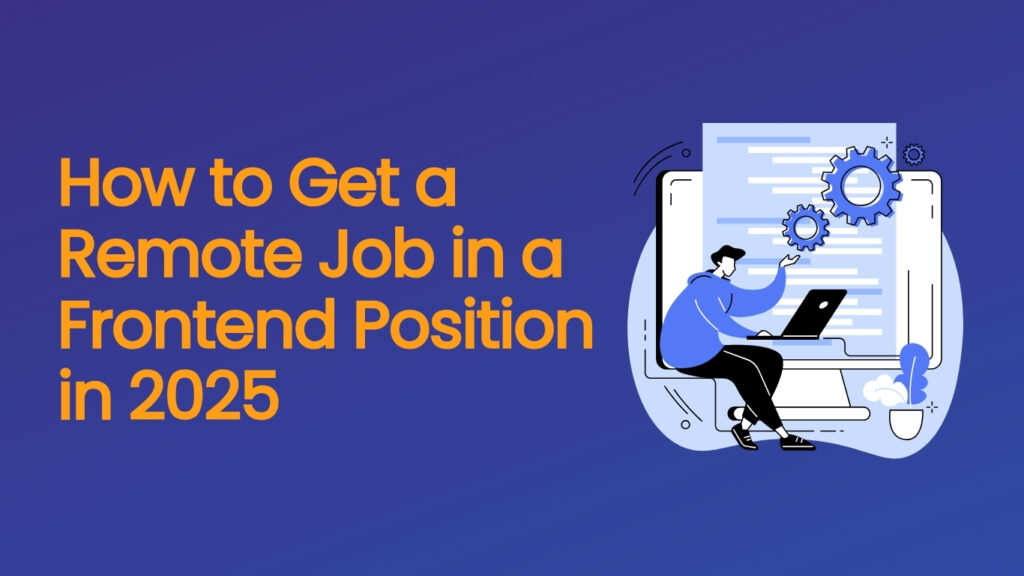
One of the most common questions aspiring frontend developers ask is simple but important: How do I actually land a remote frontend job? Remote work is not just about writing clean code or knowing frameworks. It has its own expectations, and companies want candidates who bring both technical expertise and the ability to work independently.
This guide breaks everything down, step by step. If you’ve been wondering what skills to sharpen, how to stand out, and where to look for opportunities, you’ll find clear answers here.
1. Build a Portfolio That Speaks for You
Your portfolio is your first impression in the remote world. Employers can’t meet you in person, so your work does the talking.
• Show real projects: Don’t stop at tutorials. Build practical apps, dashboards, e-commerce pages, interactive landing sites.
• Highlight UI and UX: Hiring managers look for frontend developers who understand design as well as code. A clean, intuitive layout signals attention to detail.
• Host it live: Use GitHub Pages, Vercel, or Netlify to showcase your projects. A link they can click is always better than screenshots.
• Add explanations: Briefly describe the tech stack and your role in each project. Clarity makes you memorable.
Your portfolio isn’t just a stack of code, it’s proof you can deliver user-friendly experiences.
2. Master the Core Skills (and the Tools Companies Actually Use)
A remote frontend developer needs strong foundations, but also familiarity with modern tools. Focus on what consistently shows up in job descriptions:
• Languages: HTML5, CSS3, JavaScript (ES6+).
• Frameworks & Libraries: React, Vue, or Angular (React is most in demand globally).
• Styling Tools: Tailwind CSS, Sass, or styled-components.
• Version Control: Git and GitHub for collaboration.
• Build Tools: Webpack, Vite, or Parcel.
• Testing: Jest, Cypress, or Playwright for reliable apps.
• Communication Tools: Slack, Jira, Notion, and Zoom, because remote teams rely heavily on these.
You don’t need to master everything at once. But knowing the core stack plus at least one framework well gives you an edge.
3. Position Yourself for Remote Work
Working remotely requires more than coding. Employers want self-driven problem solvers who communicate well. Show you can thrive outside an office:
• Write clean documentation: Good commit messages and README files matter.
• Be responsive: Reply quickly in interviews and emails, it mirrors how you’ll behave on the job.
• Highlight independence: In your resume, mention times you solved issues without direct supervision.
• Mention time zone flexibility: Many companies hire globally but prefer overlapping hours.
When you frame yourself as a reliable remote worker, you instantly stand out.
4. Where to Find Remote Frontend Jobs
Knowing where to look is half the journey. Fortunately, many platforms focus on remote opportunities:
• General Remote Job Boards: We Work Remotely, RemoteOK, FlexJobs.
• Tech-Specific Boards: Stack Overflow Jobs, JS Remotely, Frontend Mentor’s job board.
• Freelance Platforms: Upwork, Toptal, and Fiverr are all good for short-term contracts that can lead to long-term roles.
• LinkedIn & Twitter (X): Many startups post openings directly on social media.
• Company Career Pages: Target remote-first companies like GitLab, Automattic, or Zapier.
Tip: Set job alerts with keywords like remote frontend developer, remote React developer, or frontend engineer remote.
5. Craft a Resume That Shows Outcomes, Not Just Skills
Your resume needs to answer one question: Why should they trust you to deliver remotely?
• Lead with achievements. Instead of “Built landing page with React,” write “Developed React landing page that improved conversion rate by 22%.”
• Show project variety. Employers love seeing both solo and team work.
• Keep it one page. Clear, focused resumes work best.
• Add keywords. Phrases like remote frontend developer, React developer, and cross-functional collaboration help with Applicant Tracking Systems (ATS).
6. Nail the Remote Interview Process
Remote interviews often include technical assessments plus culture-fit questions. Prepare for both.
• Live coding tests: Practice on platforms like LeetCode, HackerRank, or CodeSignal.
• Take-home projects: Show not just code, but also comments, structure, and deployment.
• Behavioral questions: Expect “How do you manage distractions when working remotely?” or “How do you handle time zone differences?”
• Technical deep-dives: Be ready to explain why you chose a framework, or how you optimized a page for performance.
Always check your setup (camera, mic, internet) before the call. Reliability is part of the evaluation.
7. Keep Learning and Growing
The frontend world changes fast. Staying relevant keeps opportunities coming.
• Follow communities: Dev.to, Hashnode, r/frontend on Reddit.
• Take micro-courses: Platforms like Frontend Masters or Scrimba help sharpen skills quickly.
• Contribute to open source: It builds credibility and a public record of your work.
• Stay active online: Share insights or mini-projects on LinkedIn or GitHub to increase visibility.
Why Remote Frontend Roles Are Worth It
Landing a remote frontend position offers you more freedom. You gain:
• Flexibility: Work from anywhere.
• Global opportunities: Compete for roles outside your country.
• Career growth: Exposure to international teams.
• Balance: More time for family, hobbies, and rest.
Frontend skills are in demand, and remote hiring makes the field more accessible than ever.
Want Another Path to Build Remote Skills?
If you’re not ready to apply directly yet, freelance contracts are a great way to start. Platforms like Upwork and Fiverr let you:
• Gain real-world experience.
• Build testimonials and case studies.
• Earn while still learning.
Many full-time developers started with freelance gigs before transitioning into remote employment.
Remote frontend opportunities are out there, and with the right guidance, you can seize them. At Techverve, we equip you with practical skills, real projects, and career mentorship. Join us today and take the first step toward your remote future.
Final Thoughts
Getting a remote job in frontend development is a gradual process. You build a solid portfolio, sharpen the right skills, apply in the right places, and present yourself as reliable. Opportunities are out there. Companies need developers who can bring designs to life and collaborate effectively from anywhere in the world. With the right preparation, that could be you.




Leave a Comment