





Career Path of a Backend Developer: 7 Key Stages You Should Know

5 minutes read
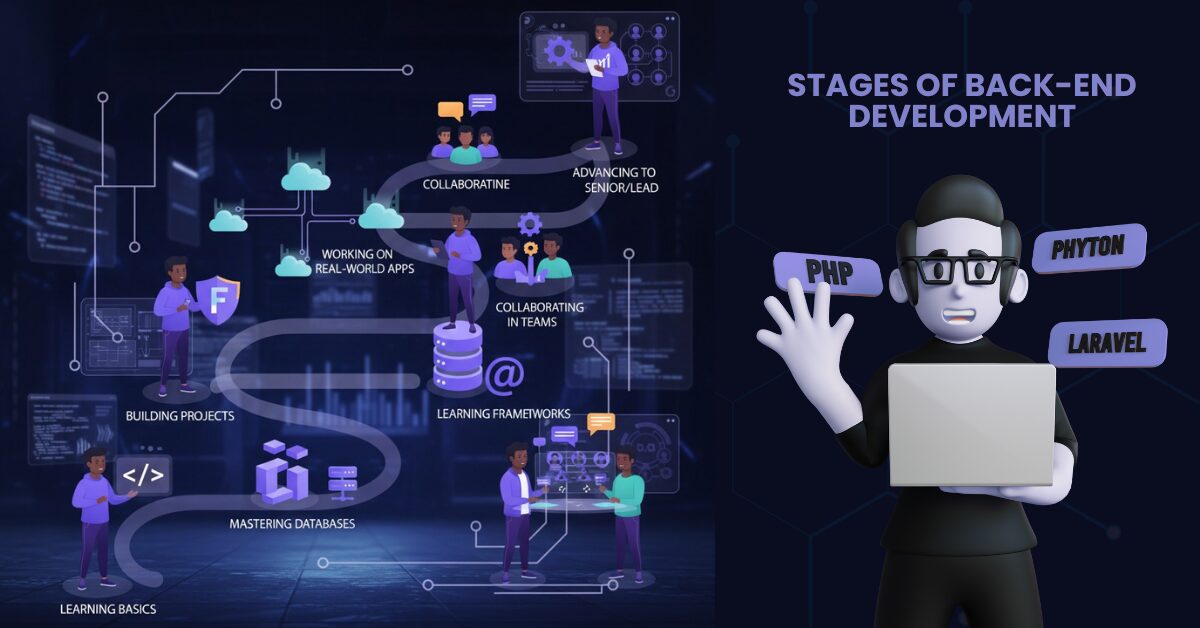
Every great digital experience you enjoy today, whether streaming your favorite movie, shopping online, or sending money through an app, relies on something powerful running behind the scenes. That hidden engine is the work of backend developers.
They build and manage the invisible side of websites and apps, making sure everything works smoothly and securely. Backend development matters because without it, all the attractive designs and features on the surface would collapse.
It is also one of the most promising career paths in the tech industry. It offers strong job opportunities, competitive pay, and room for growth because companies depend heavily on well-built backend systems.
Now that we know this, let’s take a walk through the journey many backend developers follow in their career path.
1. Start by Learning the Basics
The first stage of becoming a backend developer is about building a strong foundation. You begin by choosing a programming language such as Python, Java, PHP, Ruby, or Node.js and learning how it interacts with servers and databases.
At this point, you should also understand what APIs are and how they allow different parts of an app to talk to each other. Think of this stage as building the foundation of a house: without it, nothing else stands strong.
2. Practice by Building Simple Projects
Knowing theory is not enough. The next step is applying your skills to real projects, even if they are small. You can start by creating basic login systems, contact forms, or a to-do list app that saves data to a database.
Each project you build helps you learn how information moves behind the scenes. These small wins build your confidence and show you how theory turns into something useful.
3. Create a Portfolio and Apply for Junior Roles
Once you have a few projects you are proud of, it is time to organize them into a portfolio. A portfolio is like a personal shop window that shows employers what you can do.
This is also the stage where you start applying for internships or entry-level roles. Even a small freelance project counts as experience.
Working on real projects with teams helps you learn faster and exposes you to challenges you cannot face alone.
4. Grow Into a Mid-Level Developer
After gaining entry-level experience, the next stage is becoming a mid-level developer. Here, you stop just writing code and start understanding why certain decisions are made.
You may work on improving database speed, adding stronger security, or helping your team solve tricky bugs. This stage shapes you into a more independent developer who can handle bigger parts of a system without much guidance.
5. Choose Your Area of Specialization
Backend development is a wide field. Some developers focus on building and maintaining cloud servers, while others specialize in database design, security systems, or API architecture.
Specializing does not mean you stop learning the general skills, but it helps you stand out in the job market. For example, a developer who masters cloud infrastructure becomes valuable to companies using AWS or Google Cloud. This stage is where you choose your lane based on your strengths and interests.
6. Step Into Senior or Lead Positions
As a senior developer, you become more than a problem-solver. You start leading projects, mentoring new developers, and making key decisions about how systems are built.
You may plan the structure of new apps, decide which tools the team should use, or review code to keep everything consistent. This is the point where your experience begins to shape the direction of projects, not just your own tasks.
7. Advance to Architecture or Management Roles
The highest stage for many backend developers is moving into architecture or management. A software architect focuses on designing how large, complex systems interact.
A manager, on the other hand, leads teams, plans project timelines, and makes high-level decisions. This is where your technical background meets leadership and strategy.
You are no longer just building features; you are shaping entire products and guiding a company’s technical growth.
Skills That Grow With You
At every stage, backend developers must keep learning. New tools and frameworks appear often, and the best developers stay updated to remain valuable.
Soft skills like communication, problem-solving, and teamwork are equally important. Backend development may be behind the scenes, but it thrives on collaboration with designers, frontend developers, and product teams.
Final Thoughts
To summarize, the career path of a backend developer is a journey of steady growth, with each stage preparing you for the next. You start by learning, practice by building, grow through experience, and eventually move into leadership or specialized roles.
If you are thinking of this path, now is the best time to start. Pick a language, build your first project, and keep exploring. This field rewards consistency and curiosity.
To learn more about Backend Development and its major role, read our blog, “Who’s a Backend Developer?“

Leave a Comment