



How to Become a Frontend Developer: Your Complete Roadmap from Zero to Hired in 3 months?

9 minutes read
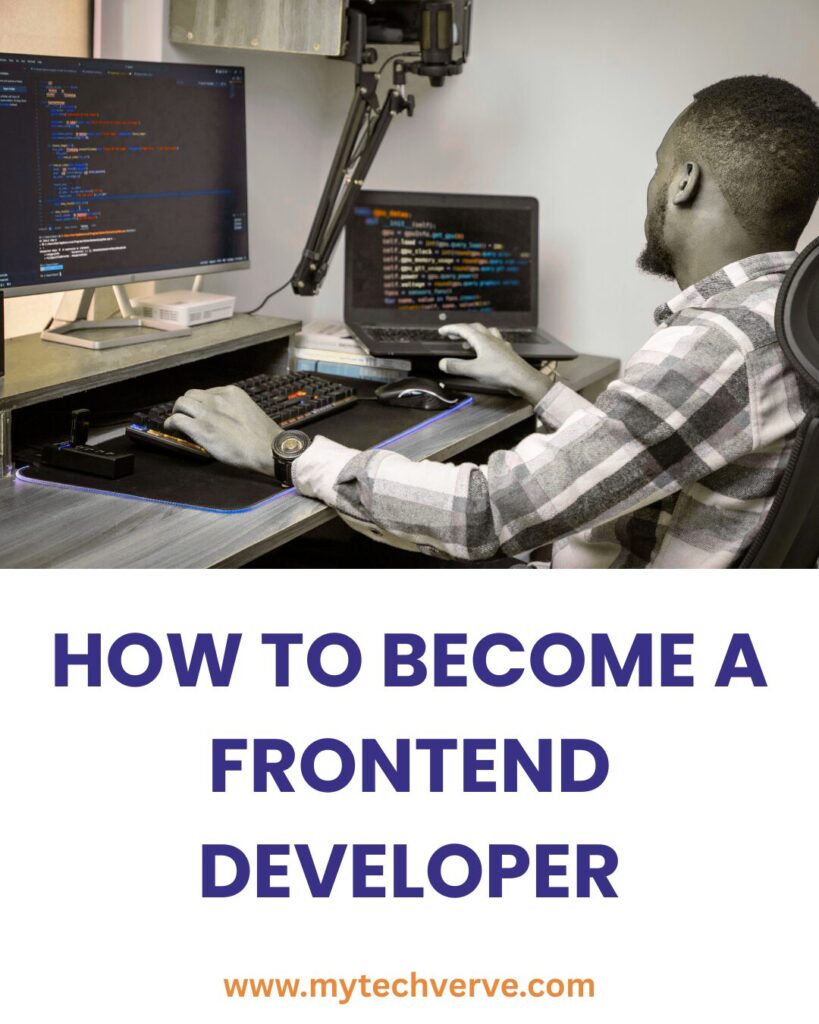
This blog will answer that question you frequently ask Google or Chat Gpt, “How can I become a front end developer”.
Now, have you noticed how smoothly Pinterest loads your photos? And when you are on Jumia and the shopping experience feels effortless, have you ever wondered who makes websites and apps work so well? Those are frontend developers, and this career path might be exactly what you’re looking for.
Maybe you are tired of your current job, or you want better pay and job security. Perhaps you have always been curious about building websites but thought it was too complicated. The good news is that you can learn how to become a frontend developer. It is more achievable than most people think, and you definitely don’t need a computer science degree to start.
Let me show you exactly how to become a frontend developer, step by step. This could be the career change that transforms your life.
What is Frontend Development and Who is a frontend developer?
Let’s keep this simple. A frontend developer builds the parts of websites and apps that people actually see and use. When you click a button and something happens, when a website looks good on your phone, when you fill out a form online, viola! That is frontend development.
Just think about it like this: if a website is a car, backend developers build the engine and internal parts you can’t see while Frontend developers create the dashboard, seats, steering wheel, and everything you interact with while driving.
Frontend developers use three main technologies. HTML creates the structure of web pages, just like the skeleton of a house. CSS makes things look good – the paint, decorations, and styling. JavaScript makes things interactive (when you click buttons, submit forms, or see animations).
These three languages work together to create the websites you use every day. Master them, and you can build almost any website or web application you can imagine.
Why Choose Frontend Development?
Do you know what makes frontend development perfect for career changers? It is the fact that you can see your progress immediately. That immediate fulfilment is bliss. For examples, once you write some code to change a button colour, you see it change instantly. You create an animation, and you watch it work right away. This visual feedback makes learning much easier than other types of programming.
The job market is incredible right now because every business needs a website. Every startup needs an app. Every company wants to improve their online presence. This creates massive demand for people who can build these digital experiences.
In Nigeria, skilled frontend developers earn between ₦200,000 and ₦500,000 monthly, depending on experience and location. International remote work can pay even more – many Nigerian developers work for US or European companies and earn $1,000 to $4,000 monthly.
The best part? You can start earning money before you master everything. Many developers take freelance projects while still learning, building their skills and income simultaneously.
Your Step-by-Step Learning Path to become a frontend developer
Ready to start? Here’s exactly what to learn and in what order. Following this roadmap will save you months of confusion and get you job-ready faster.
Step 1: Learn HTML Basics
Start with HTML fundamentals. Learn how to create headings, paragraphs, links, images, lists, and forms. Practice by building simple web pages about topics you are interested in. HTML is like learning the alphabet – it’s essential for everything else.
Step 2: Master CSS Styling
CSS is where the magic happens visually. You will learn how to add colours, fonts, layouts, and make your websites look professional. Focus on flexbox and grid for layouts – these are essential for modern web design. Practice by recreating designs you like from other websites.
Step 3: Add JavaScript Interactivity
JavaScript brings your websites to life. Start with basics like variables, functions, and responding to button clicks. Then learn how to manipulate web page content, validate forms, and fetch data from other websites. JavaScript takes longer to learn but it’s where you’ll feel like a real programmer.
Step 4: Learn a Modern Framework
Once you are comfortable with vanilla JavaScript, learn React. It’s the most popular frontend framework and what most employers want. React makes building complex applications much easier and is essential for professional frontend development.
Step 5: Master Developer Tools (ongoing) Learn Git for version control – this is how developers save and share code. Understand how to use browser developer tools for debugging. Get comfortable with package managers like npm. These tools are essential for professional work.
Building Projects That Matter
Here is the secret most tutorials won’t tell you. You learn frontend development by building real projects, not by following endless courses. Start building from day one, even with basic knowledge.
Create a personal website first. It doesn’t need to be fancy – just a simple page about yourself with your photo, bio, and contact information. As you learn new skills, keep improving this website.
Build a portfolio site to showcase your projects. This becomes crucial when you start applying for jobs. Employers care more about what you can build than what courses you have completed.
Try building useful tools like a calculator, weather app, or task manager. Choose projects that solve problems you actually have. This always makes the work more meaningful and gives you better motivation to finish.
Copy designs from websites you admire, but build them from scratch. This teaches you how professional websites are structured and helps you understand design principles. Don’t worry about originality at first, focus on learning by doing.
Document your projects on GitHub. Write simple explanations of what each project does and how you built it. This shows employers your thought process and communication skills.
Finding the Right Learning Resources
The internet is full of frontend development resources, but not all are worth your time. Here’s what actually works for most people.
Free Resources: FreeCodeCamp provides excellent project-based learning that’s completely free. Their curriculum takes you from beginner to job-ready with real projects you can add to your portfolio.
YouTube has great tutorials for specific topics. Channels like Traversy Media, Web Dev Simplified, and The Net Ninja offer high-quality content. But remember, watch to learn specific skills, then practice on your own projects.
Paid Options: If you prefer structured courses that focus on teaching you to build real projects rather than just explaining concepts, where your learning experience is personalized and you can get access to mentors for life, then the Techverve platform is your best shot at greatness. Note that courses/ learning platforms that include code reviews and feedback tend to be more effective. The accountability and personal guidance accelerates your progress significantly.
Creating Your Developer Portfolio
Your portfolio is your ticket to getting hired. It is more important than your resume because it shows what you can actually build. Here’s how to create one that gets attention.
Include three to five projects that demonstrate different skills. One project might show beautiful CSS design and animations. Another might demonstrate JavaScript functionality like fetching data from APIs. A third could show you can work with React or another framework.
For each project, write a brief explanation of what it does, what technologies you used, and any interesting challenges you solved. Include links to both the live website and your code on GitHub.
Make your portfolio website itself impressive. It should look professional, load quickly, and work perfectly on mobile devices. This website represents your skills, so make it count.
Keep your portfolio updated as you build new projects and learn new skills. Remove weaker early projects as you create better ones. Your portfolio should always represent your current skill level.
Getting Your First Frontend Developer Job
The job search process for frontend developers focuses heavily on your technical skills and portfolio. Expect coding challenges during interviews where you’ll solve problems live or take home assignments to complete.
Start applying for jobs when you have a solid portfolio and can build responsive websites with HTML, CSS, and JavaScript. Many companies hire junior developers who are still learning – they value problem-solving ability and willingness to learn over perfect knowledge.
Practice common interview questions like “How do you make a website responsive?” or “What’s the difference between let, var, and const in JavaScript?” Be ready to explain your projects and walk through your code.
Consider freelance work to gain professional experience. Small local businesses often need websites, and these projects can help you build a track record and references. Freelance platforms like Upwork and Fiverr can provide opportunities to practice working with real clients.
Network with other developers through meetups, online communities, and social media. The tech community is generally supportive, and many people are willing to help newcomers. Don’t be afraid to ask questions or seek advice.
Taking Your First Step
If the whole concept of solving problems as a frontend developer sounds appealing, start today with something simple. Open a text editor on your computer, create a file called “index.html”, and write a basic webpage about yourself. It doesn’t need to be perfect – just start building.
The journey from complete beginner to hired frontend developer is completely achievable. Thousands of people make this transition every year, coming from backgrounds in teaching, sales, customer service, and every other field you can imagine.
The tech industry needs more diverse perspectives and backgrounds. Your unique experience and viewpoint could be exactly what a team needs, combined with the technical skills you’re about to learn.
Your future as a frontend developer starts with that first line of code. The question isn’t whether you can learn these skills – The real question is: Are you ready to begin? You can start your journey here:



Leave a Comment